Never miss twice: how to get back on track after a missed day
Never miss twice is a rule for keeping a habit alive: missing one day is an accident, missing two in a row is the start of a new pattern. When you slip, you don’t wait for Monday. You make sure the very next day counts, even if you only do a small version of the habit.
Four weeks of one habit. Tap a day to mark it missed.
R = a repair day. This assumes you spend a repair whenever one is allowed: on a missed day when the day before it counts (done, or itself repaired). 1 of 3 repairs left this month.
What “never miss twice” means
Most habits don’t die from one bad day. They die from the second one, because two misses in a row quietly turn “I skipped” into “I stopped”. Never miss twice draws the line there: you are allowed to miss, but never twice in a row.
It works because it is forgiving and strict at the same time. It accepts that a missed day will happen, and it gives you one clear job when it does.
Why the second miss is the one that matters
In a well-known 2009 study of habit formation at University College London, missing a single day did not meaningfully slow down how quickly a new behaviour became automatic. What hurts is a run of misses, because each one makes the next easier to justify.
So the useful question after a bad day isn’t “why did I fail?” but “what is the smallest thing I can do tomorrow?”
What to do after missing a day of a habit
Treat one miss as an accident.
Notice it and skip the guilt. Don’t wait for Monday or the first of the month to start again; the next day is the restart.Make tomorrow non-negotiable.
The only rule is that the miss doesn’t happen twice in a row. Do the habit early tomorrow, or attach it to something you already do every day.Shrink the habit for one day.
If the full version feels too big, do a tiny one: one page, one push-up, two minutes. A small rep still counts as showing up.Fix what caused the miss.
Travel, a late night, no cue? Change that one thing so the same miss doesn’t come back next week.
How to fix a broken habit streak
A streak counter that drops to zero after one bad day punishes the exact moment you need encouragement. There are two honest fixes.
If you did the habit and only forgot to log it, log it: the day happened. If you really missed it, use a repair: a small, limited allowance of excused days, so the streak reflects the habit rather than one bad Tuesday. Keep the allowance small, or it stops meaning anything.
Never miss twice vs. don’t break the chain
“Don’t break the chain” says every day counts, so a single miss resets everything. “Never miss twice” accepts that one miss will happen and protects the habit instead of the number.
The chain is a great motivator for the first few weeks. Never miss twice is what keeps a habit going for years.
In the app
How Once handles a missed day
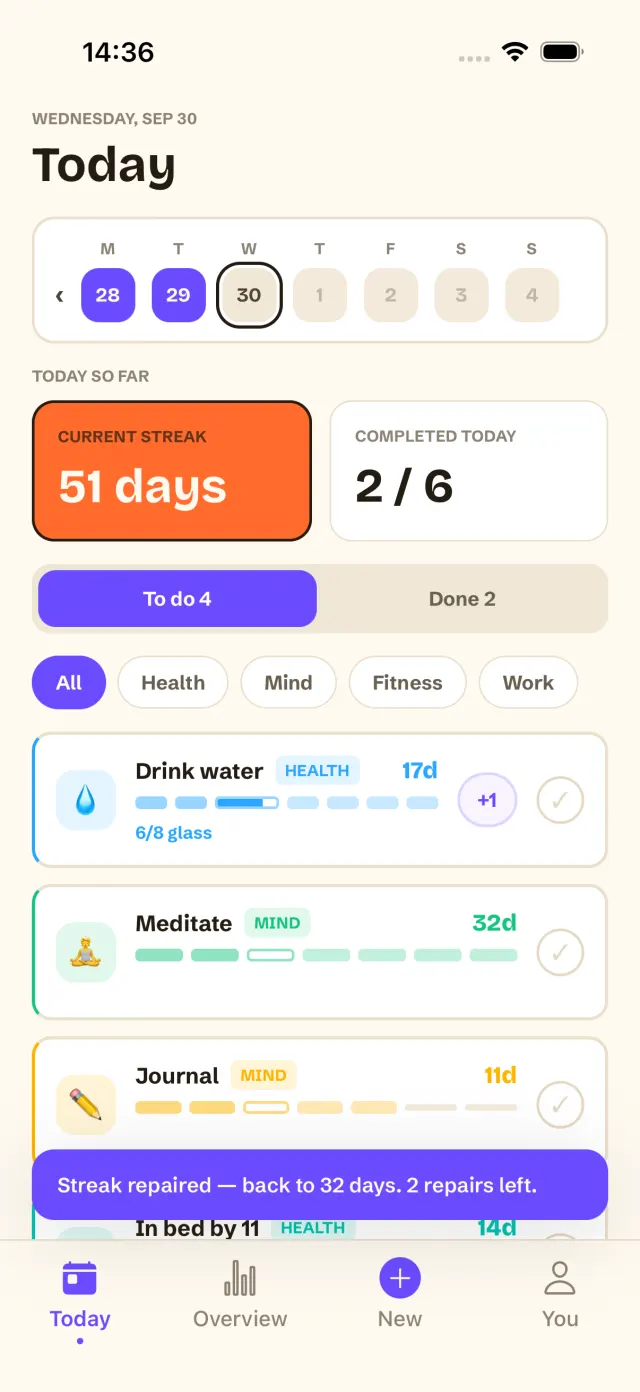
Once is a habit tracker for iPhone built around this rule. Miss a day and the streak shows as paused instead of dropping straight to zero. Spend a repair day to bridge the miss and the streak carries on.
Repairs are limited to 2, 3 or 5 a month, your choice, so they cover a bad day rather than a bad month. If you did the habit but forgot to log it, fill in the day instead. Repair days are part of the free plan.
Download on the App StoreQuestions
What is the never miss twice rule?
It is a habit rule that says you may miss a day, but never two days in a row. One miss is an accident; two in a row is the start of a new pattern.
Is it okay to miss one day of a habit?
Yes. Research on habit formation found that missing a single day does not meaningfully set a new habit back. What matters is getting back to it the next day.
Does missing a day reset a habit?
The habit, no. A strict streak counter might, which is why some habit trackers let you repair a missed day instead of starting from zero.
How do I get back on track after missing a habit?
Do the habit the very next day, even in a tiny version, and fix whatever caused the miss. Don’t wait for a fresh start like Monday or a new month.
Keep reading